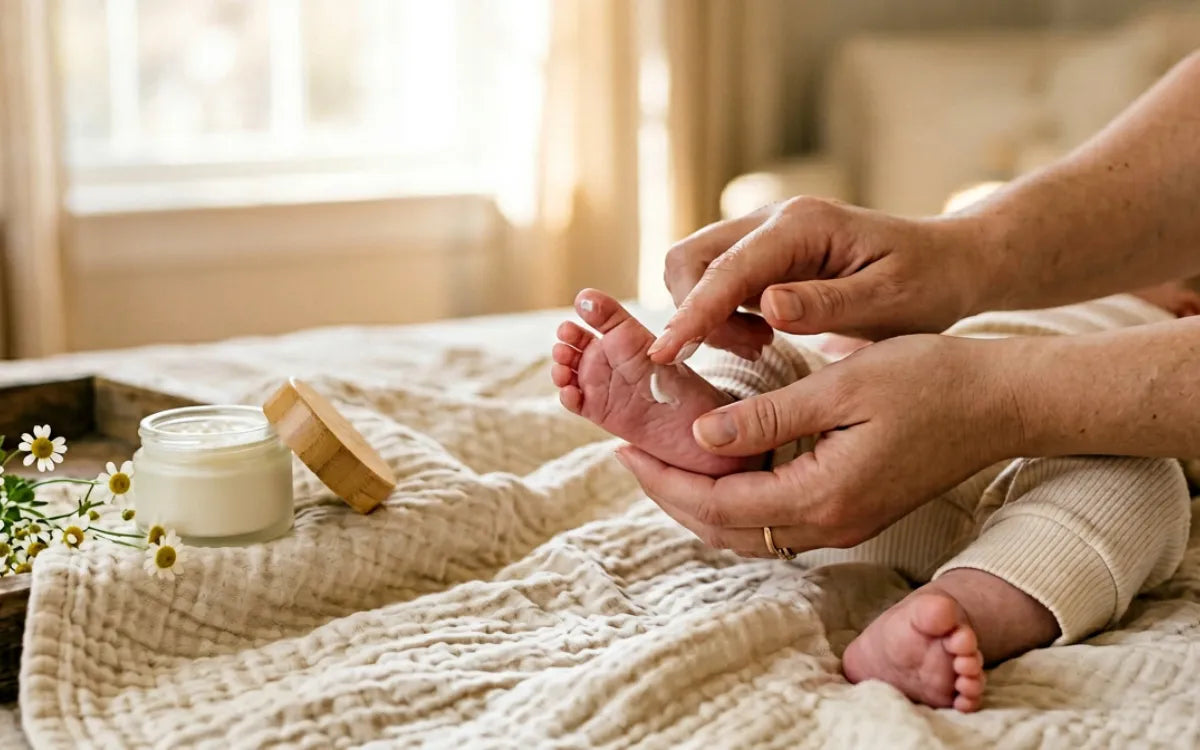
When you hold your baby for the first time, something shifts. Suddenly every product, every ingredient, every label matters. You want to give them the safest, purest, most gentle start possible.
But the baby skincare aisle? It's a minefield.
The Problem with "Baby Safe" Products
Just because a product says "gentle," "natural," or "for sensitive skin" doesn't mean it's actually safe. The beauty industry is largely self-regulated, and companies can use these terms with almost no accountability.
Many popular baby products contain:
- Fragrance — A catch-all term that can hide dozens of undisclosed chemicals, including phthalates and synthetic musks
- Sodium Lauryl Sulfate (SLS) — A harsh foaming agent that strips natural oils and irritates delicate skin
- Parabens — Preservatives that mimic estrogen and have been found in breast tissue samples
- Mineral oil — A petroleum byproduct that sits on top of skin, trapping bacteria and preventing it from breathing
- Phenoxyethanol — A preservative that the FDA has warned can cause vomiting, diarrhea, and central nervous system depression in infants
These ingredients are in products marketed specifically for babies. That's not okay.
How to Read a Label
The ingredient list is your best friend. Here's how to use it:
- Fewer ingredients = better. If the list wraps around the bottle, put it back.
- If you can't pronounce it, research it. Not all long names are bad (tocopherol is just vitamin E), but it's worth checking.
- "Fragrance" is a red flag. This single word can represent dozens of hidden chemicals. Look for products scented with pure essential oils or labeled "unscented."
- Ignore the front of the label. "Natural," "pure," "gentle," and "organic" are not regulated terms in the cosmetics industry. The back of the bottle tells the real story.
What to Look For Instead
The best baby skincare is simple. Your newborn doesn't need a 10-step routine. They need gentle, nourishing ingredients that support their skin's natural development.
Look for:
- Organic oils — Jojoba, coconut, and olive oil are all gentle and effective moisturizers
- Grass-fed tallow — Bio-compatible with human skin, rich in vitamins A, D, E, and K, and gentle enough for the most sensitive skin
- Beeswax — Creates a breathable protective barrier without clogging pores
- Shea or cocoa butter — Rich, natural moisturizers (look for unrefined and organic)
- Zinc oxide (non-nano) — For sun protection that sits on top of the skin instead of absorbing into it
Building a Simple Routine
Less is more. Here's all you really need:
Daily moisturizing: After bath time, apply a small amount of organic body butter to slightly damp skin. This locks in moisture and keeps skin soft. Our Love Butter in the unscented option is perfect for this — just four organic ingredients and nothing else.
Diaper area: A thin layer of tallow-based butter creates a natural moisture barrier that protects against irritation. No need for zinc-heavy paste unless there's an active rash.
Sun protection: For babies over 6 months, use a mineral-based sunscreen with non-nano zinc oxide. For babies under 6 months, the AAP recommends keeping them out of direct sunlight and using protective clothing. Our Love & Protect is safe for the whole family when you're ready.
Bath time: Babies don't need soap every day. Warm water is enough for most baths. When you do use a cleanser, choose one with minimal ingredients and no SLS or synthetic fragrance.
Trust Your Instincts
As a first-time mom, our founder went through this exact journey. Reading labels. Researching ingredients. Feeling overwhelmed by how many "baby safe" products weren't safe at all.
That frustration became the foundation of Love, Max & Mila. Every product we make is something we use on our own kids — because we believe what you put on your body is just as important as what you put in your body.
You don't need a cabinet full of products. You need a few good ones made with ingredients you can trust.
Love the skin they're in.